Kudzu Removal Service
"Get Your Yard Back"

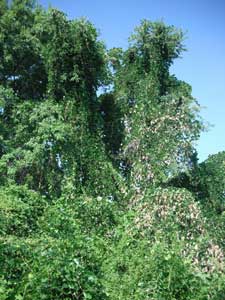
As a born and raised Southerner, I have been battling kudzu for as long as I have been walking. It IS the bane of the Southeastern United States and has earned the nickname “the vine that ate the South”. I have spent many years studying this marvelous yet insidious plant. While kudzu can be quite stubborn, over the years I have learned and developed methods that can all but eliminate existing kudzu growth.

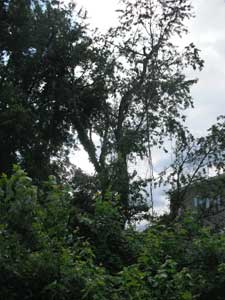
Before After
Generally speaking there are three methods of killing kudzu:

1. Chemical Agents.
I DO NOT USE NOR CONDONE THE USE OF CHEMICAL AGENTS. While people have successfully used chemical agents to eradicate kudzu, none have proven to work reliably or repeatedly. Kudzu is such a strong and hardy plant that by the time you treat it with enough chemicals to kill it you have also killed most of the surrounding vegetation. Again, I DO NOT USE NOR CONDONE THE USE OF CHEMICAL AGENTS.

2. Suffocation.
The Suffocation method cuts off the light source as opposed to the water source. There are two ways to go about this, one is to cover the kudzu with heavy tarps or plastic for extended periods of time. This can take weeks or even months to work properly. The other way is with a heavy layer of mulch or grass clippings. A dense layer 6 inches in depth has shown to produce the same results as the tarp or plastic method. When used together these two techniques work remarkably well.

3. Manual Crown Removal
This method involves severing the water source by manually removing the crown, which produce new vines, from the root structure, which gather water and nutrients. It is only necessary to remove the crown from the taproots, you do not have to dig up the entire root structure as myth suggests. This is labor intensive but is the most effective and least invasive. This selectively allows you to remove the kudzu and kudzu only with little to no harm to surrounding vegetation. This is my preferred method of eliminating kudzu.

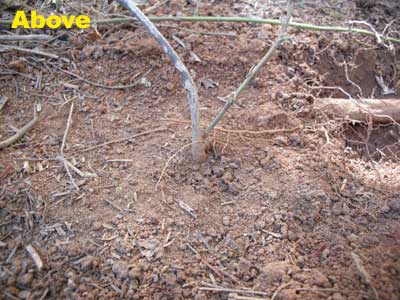
Established tap root producing new vines. This particular root and node originated from above ground from the vine indicated in yellow. Tap roots can grow in excess of 25" deep into the ground.

New vines produced from an underground source indicated in yellow. These tend to produce many smaller fingering tap roots as opposed to one large tap root.
Can you contain
or trap kudzu?
When should you
NOT remove kudzu?

Yes. You can in essence trap kudzu by understanding how it climbs and grows. Unlike ivy, kudzu does not have “feet” that grow into a surface. Kudzu climbs by reaching for surfaces that it can wrap itself into or around. Whereas ivy can climb a tree by creeping up the bark, kudzu must have a limb or other protruding surface to grab onto in order to climb. Most vines can only grow about 31/2 feet without support, after that they will fall under their own weight. By removing protruding surfaces or filling in gaps, you take away kudzu’s ability to climb. The process of “banding” a tree requires just that. By removing any lower branches to a height of 4 feet the kudzu will soon realize that there is nothing there to climb and it will move on.

Tests have shown that black plastic with a UV protectant can deter growth. Laid horizontally, the plastic can cut off the light source inhibiting new growth from underneath. When affixed vertically, the plastic provides a very slippery surface that a vine cannot grab on to.
Grazing animals are particularly effective at containing kudzu. Kudzu is a cheap and renewable food resource for farm animals. Goats and sheep are especially known for their love of the plant.

Odd as it may sound, kudzu does have its’ merits. There are situations where you may want to control and maintain the growth as opposed to eliminating it:

1. Steep slopes and embankments. Kudzu was planted and encouraged to grow around lakes and ponds where it does a fantastic job of stabilizing the surrounding earth. Its' incredibly strong and tight root structure is the reason it was imported from the orient. The same applies to steep slopes and areas that are known for water runoff. I have known many people to clean out "that old hill in the backyard" only to have the same hill come crashing down on them after the first rainstorm.

2. Tree growth near power lines. Kudzu can produce a thick “canopy” on top of trees stubbing overhead growth. There are many examples around us of kudzu preventing trees from growing into overhead power lines.

3. Parched and arid soil. Kudzu tap roots have been known to grow over 25 feet deep into the ground in order to reach water. By doing this kudzu therefore brings deep ground water and nutrients to the surface for other plants to flourish. The same applies to clay beds and other nutrient starved soils.

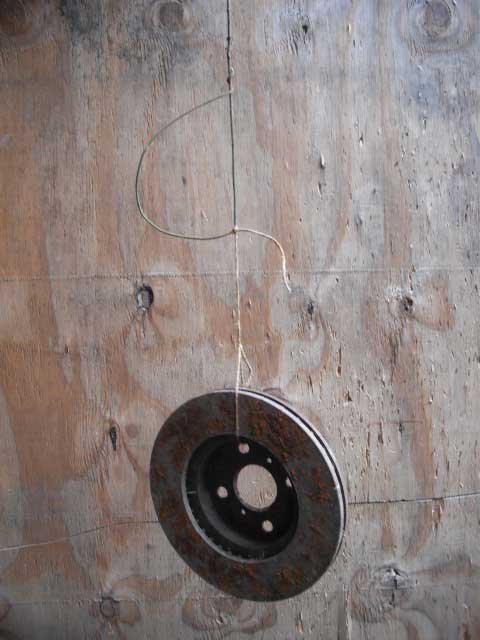
A fresh cut vine with a diameter of 1/8 of an inch can support this
brake rotor that weights just under 15 pounds!

Which is the best season
to remove Kudzu?

The ideal times to remove kudzu tend to be at the peak summer and winter months. During the peak of summer all vines are somewhat established, giving you a better sense of what you are dealing with. This is compared to the spring season where seeds and new vines could still be slowly developing. Removing old growth will then provide more light for sprouting growth to flourish. Spring is not necessarily a bad time to remove kudzu, just not as preferable.

In autumn kudzu produces seed pods much like it’s relative, the common pea. Kudzu seeds can remain dormant in the ground for several years before sprouting. While studies have shown that only about 25% of new growth comes from these seeds, sometimes it is a good idea to just leave well enough alone. In trying to remove exiting growth you will inadvertently aid in the distribution of the seeds. Such as spring, it’s not necessarily a bad time to remove kudzu, just not preferable.


This site and contents: Copyright 2013-2020 All Rights Reserved

Site is built and maintained by M32ad

Home-Interior-Exterior-Various-Kudzu-About-Contact

m32adpaint@gmail.com